Stump grinding in South London costs between £100 and £350 per stump for most residential jobs, with pricing based on the stump’s diameter, the species of timber, and how easily our machinery can access the site — narrow side gates and terraced rear gardens being the most common access constraint across Lewisham, Greenwich, and Southwark. Tree Surgeons in South London removes stumps to 15–30cm below ground level using professional grinding equipment, leaving the area ready for replanting, turfing, paving, or construction. We offer stump grinding as a standalone service or alongside tree felling and removal.
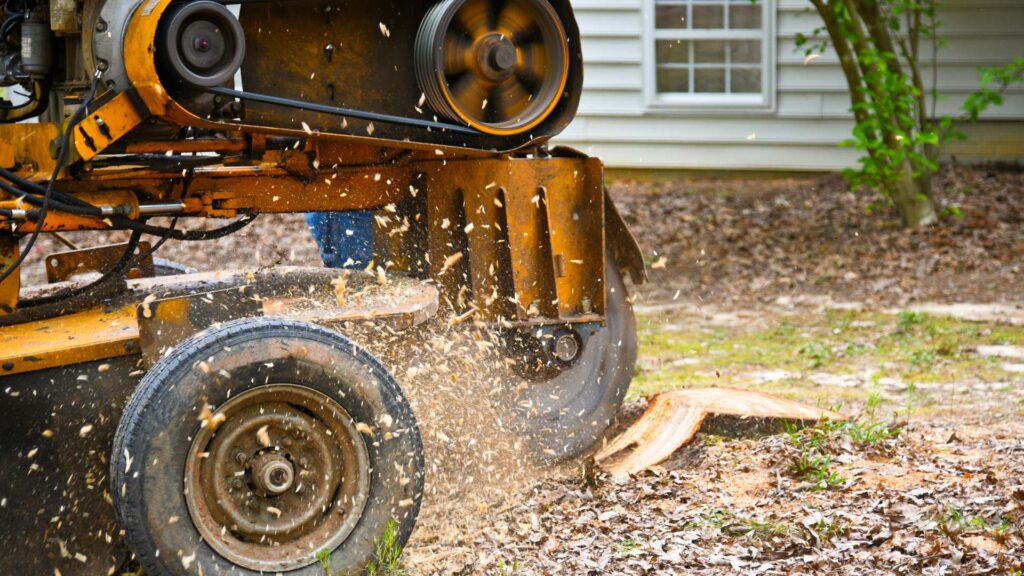
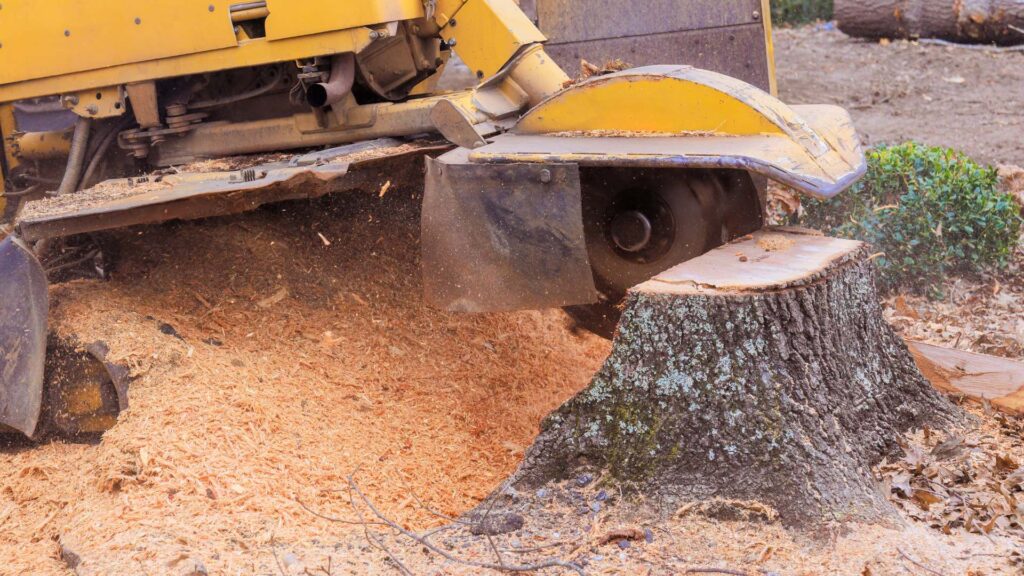
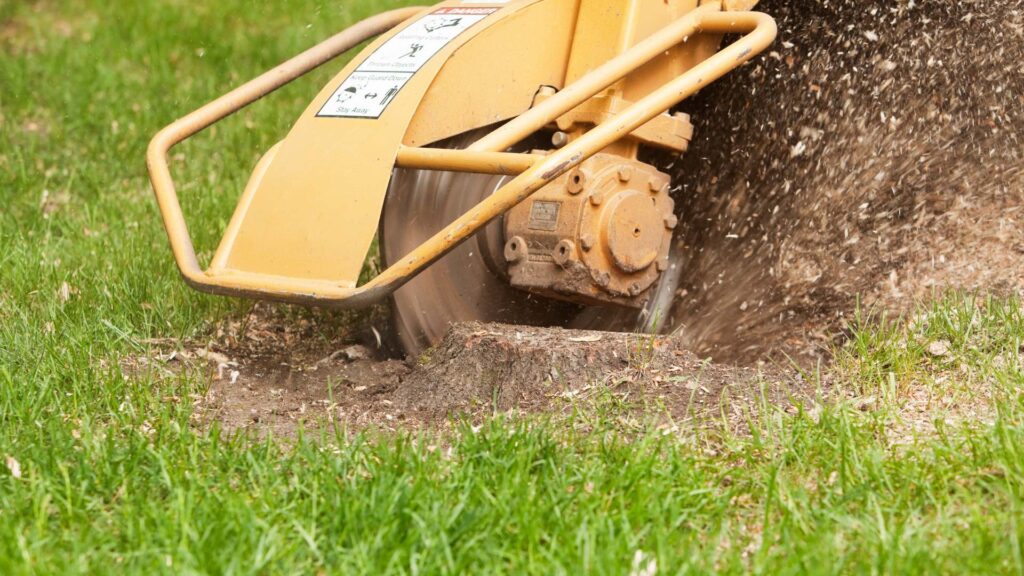
Stump grinding is a mechanical process that uses a specialist machine fitted with a rotating carbide-tipped cutting wheel to chip away a tree stump and its major surface roots to below ground level. The grinding produces a mix of woodchip and soil that fills the hole left by the stump.
The machine is compact enough to access most South London gardens — including rear gardens reached through narrow side passages, which is the reality for the majority of terraced and semi-detached properties across the area. For front garden stumps near paths and driveways, the machine works precisely enough to grind within centimetres of hard surfaces without causing damage.
Stump grinding is faster, less disruptive, and more affordable than full stump extraction, which requires digging out the entire root system with heavy machinery. For the vast majority of residential situations in South London, grinding is the right approach.
Why remove a tree stump comes down to five practical problems that get worse the longer you leave it.
Regrowth
Many common South London species produce vigorous shoots from the stump after felling. Sycamores, willows, limes, cherries, and poplars are particularly persistent — they send up dozens of shoots within weeks, and those shoots grow fast. Without grinding or treatment, you will be cutting regrowth repeatedly for years.
Honey fungus
A decaying stump is the ideal host for honey fungus (Armillaria mellea), one of the most destructive plant pathogens in the UK. Honey fungus spreads underground via black bootlace-like rhizomorphs and can infect and kill healthy trees, shrubs, hedges, and perennial plants nearby. In South London’s tightly packed gardens, a single infected stump can threaten plants across your garden and your neighbours’ properties. Removing the stump eliminates the primary food source and significantly reduces the risk of spread.
pests
Rotting stumps attract wood-boring beetles, ants, and other insects. While not usually harmful to humans, they can become a nuisance — particularly when the stump is close to the house or a garden seating area.
Space
South London gardens are rarely large. A stump in the middle of a lawn, patio area, flower bed, or play zone takes up space you cannot use for anything else. If you are planning landscaping, an extension, a shed, fencing, or replanting, the stump needs to go.
Trip hazard and appearance
As a stump decays, the surrounding ground settles unevenly. Stumps hidden by grass or ground cover become trip hazards. A dead stump also detracts from the appearance of an otherwise well-maintained garden.
How stump grinding works follows a straightforward three-stage process.
First, we assess the stump and check for underground services. We measure the stump’s diameter and identify the species. We also check for gas, water, electricity, drainage, and telecoms running near the stump — South London’s older Victorian and Edwardian properties often have services in unexpected locations. If the stump sits immediately adjacent to a wall, building foundation, or other structure, we assess whether grinding is safe or whether an alternative approach is needed.
Second, we grind the stump below ground level. The machine works the stump down to the agreed depth — typically 15–30cm below the surrounding soil surface. For situations where replanting or construction is planned directly over the stump location, we can grind deeper. The machine handles stumps of all sizes, from small ornamental trees to large hardwood stumps over a metre in diameter.
Third, we clean up and leave the site ready. Grinding produces a pile of woodchip mixed with soil. We can backfill the hole with this material and level it off, remove the grindings from site entirely, or spread the woodchip as mulch elsewhere in your garden — whichever you prefer. The area is left level and ready for its next use.
Stump grinding versus full extraction versus eco plugs — three different approaches suited to different situations.
Stump grinding removes the stump to below ground level. Surface roots within the grinding zone are removed, but deeper roots remain in the soil and decompose naturally over 5-10 years. This is the standard approach for the vast majority of residential and commercial situations. It is cost-effective, relatively quick, and causes minimal disruption to the surrounding garden.
Full stump extraction digs out the entire root system using a mini excavator. It is significantly more invasive, more expensive, and causes considerable disruption to the surrounding area — lawns, beds, paths, and neighbouring features can all be affected. Extraction is usually only necessary when building foundations, installing drainage, or laying services directly over the stump location where deep roots must be completely removed.
Eco plugs are a chemical treatment inserted into drilled holes in the stump. They kill the stump and prevent regrowth, but the stump remains in the ground at full size and takes 2-5 years to decompose fully. Eco plugs are the cheapest option and work well for stumps in out-of-the-way locations — the back corner of a garden, a wooded area, or a spot where you do not need the space immediately.
We advise on the best approach for your specific situation during a free site visit.
Stump grinding costs in South London are based on the stump’s diameter measured at ground level, the species (hardwoods like oak, beech, and sycamore take longer to grind than softwoods like pine and willow), site access, and the number of stumps.
A single small to medium stump in an accessible location typically costs between £100 and £200. Larger stumps and hardwood species cost more. Multiple stumps on the same site are discounted — it is always more cost-effective to have several done in one visit than to arrange separate appointments.
We provide written quotes after a free site visit. The price is fixed — no hourly rates, no surprises on the day.
Small to medium stumps in accessible locations cost between £100 and £200. Larger stumps and hardwood species cost more. Multiple stumps on the same site are discounted. We provide fixed quotes after a free site visit.
Most individual stumps take 30-60 minutes. Larger stumps and harder species take longer. Multiple stumps on the same site can usually be completed in a single visit of a few hours.
Yes, but we recommend removing the grindings, backfilling with fresh topsoil, and waiting a few weeks before planting. Decomposing woodchip temporarily draws nitrogen from the soil, which can affect new plants in the short term.
The machine is precise and we take care around walls, paths, fences, and established plants. Surface roots extending from the stump into adjacent areas may need to be cut during the process. We discuss any potential impacts before starting.
No. After grinding, remaining roots are severed from the stump and decompose naturally over several years. They do not produce regrowth and will not cause structural issues.
Call us or fill in the contact form for a free quote. We serve Lewisham, Greenwich, Southwark, Bromley, Lambeth, Dulwich, Catford, Deptford, Brockley, Camberwell, Peckham, Blackheath, Herne Hill, Eltham, Forest Hill, and all surrounding areas.