
Tree pollarding in South London costs between £300 and £1,200 per tree depending on the species, the volume of regrowth, access, and how long it has been since the last cycle — with overdue pollards carrying significantly more material and costing more to bring back under control. Tree Surgeons in South London carries out pollarding on London planes, limes, willows, horse chestnuts, and other suitable species across Lewisham, Greenwich, Southwark, Bromley, and Lambeth. Our NPTC-qualified arborists pollard at the correct time of year using proper arboricultural cuts that keep trees healthy for decades of continued management.
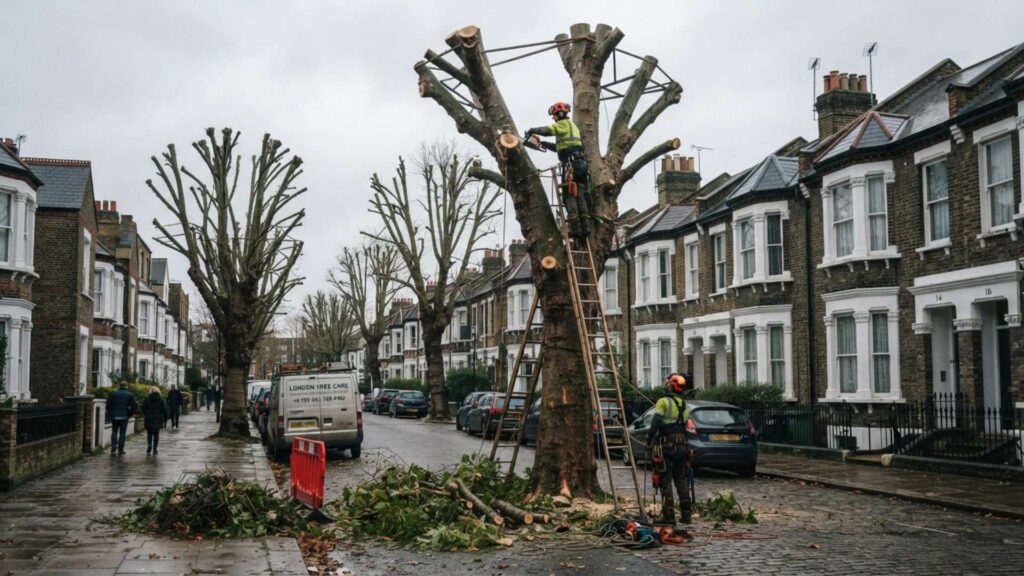
Pollarding is a traditional pruning technique that involves cutting a tree’s branches back to the main trunk or to a framework of primary limbs known as the pollard head. The tree produces a flush of new shoots from these cut points, which are removed again on a regular cycle — typically every one to five years depending on species and growth rate.
The result is a tree that stays permanently compact. Instead of growing into a large specimen with a full spreading canopy, a pollarded tree maintains a controlled head of regrowth on a clean trunk or framework. South London’s streets, parks, and residential areas contain thousands of pollarded trees — the distinctive knobbly pollard heads visible on London planes along main roads are the result of decades of repeated cutting at the same points.
Pollarding has been practised in London for centuries. It remains one of the most effective ways to keep large tree species in urban settings where space and light are at a premium.
When pollarding is the right approach depends on the specific situation and the tree species involved.
Pollarding is appropriate when a tree needs to be kept at a fixed, compact size permanently — a large willow near a building in Lewisham, a lime tree overhanging a road in Greenwich, or a London plane in a small Dulwich garden that would otherwise grow far too large for the space.
It is also the right approach when trees line a street, boundary, or driveway and need to be managed as a uniform row at a consistent height — common in residential streets and estate roads across South London boroughs.
Pollarding works when light and space beneath the canopy need to be maintained year after year. The tree opens up during dormancy when the regrowth is removed and stays relatively compact during the growing season.
Critically, pollarding is also the only appropriate approach when a tree has been pollarded before. Once a tree has been pollarded, it must continue on a regular cycle. Skipping cycles allows the regrowth to become large, heavy, and weakly attached to the pollard head. These overgrown shoots are significantly more likely to fail than normal branches — they grow from the cut surface rather than from a natural branch junction and lack the structural wood that gives properly attached branches their strength.
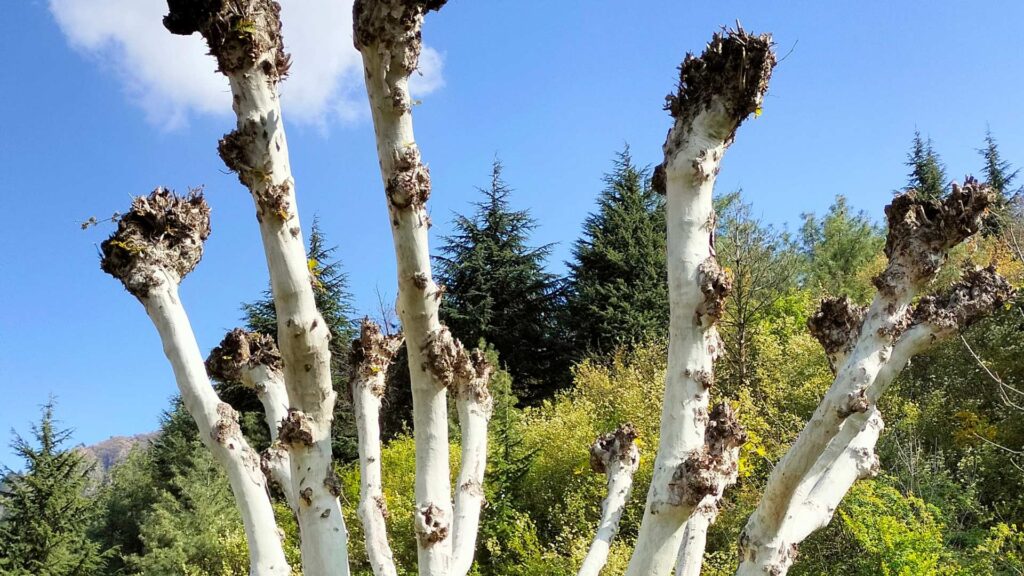
Species suited to pollarding in South London include several that are common across the area’s streets, parks, and gardens.
London Plane (Platanus x acerifolia) — the most iconic pollarded tree in London. Tolerates hard pollarding exceptionally well and produces dense, vigorous regrowth. Thousands line South London‘s main roads.
Lime (Tilia spp.) — commonly pollarded in residential streets, parks, and along property boundaries. Produces abundant regrowth and tolerates repeated cutting over decades.
Willow (Salix spp.) — pollarding is essential for willows in most urban and garden settings. Without regular management, willows grow rapidly into large trees with brittle wood that is highly prone to failure in wind.
Horse Chestnut (Aesculus hippocastanum) — pollarded in parks and some larger gardens across South London. Tolerates the process but is less commonly pollarded than planes and limes.
Sweet Chestnut, Mulberry, and some Oaks — historically pollarded in parks, estates, and ancient woodlands.
Species that should NOT be pollarded: Most conifers (except yew), birch, beech (in most circumstances), and cherries. Pollarding these species causes severe dieback or death. Our arborists always assess suitability before recommending pollarding — if the species is not suitable, we recommend crown reduction as an alternative.
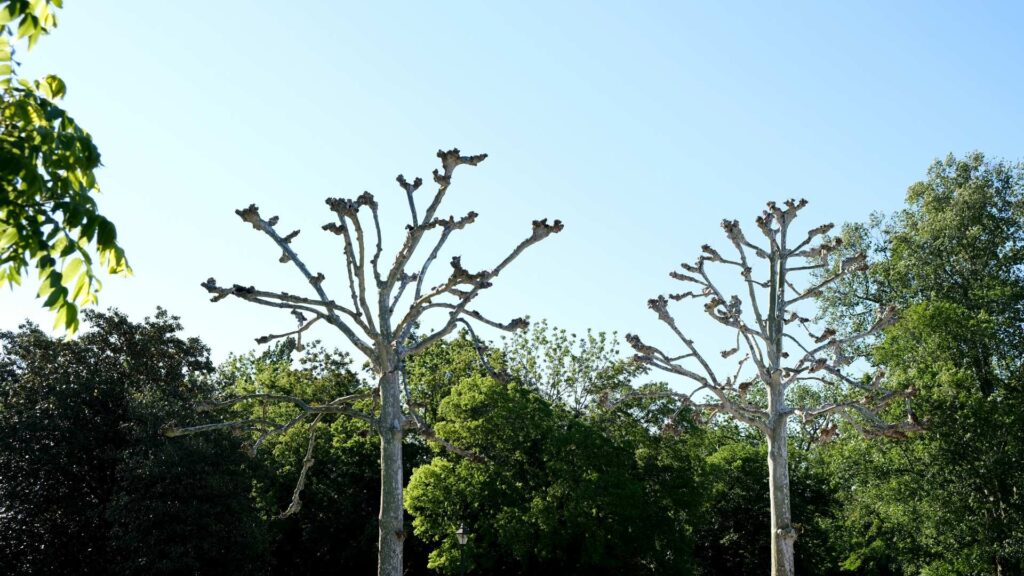
When to pollard depends on the species, but all pollarding should be carried out during the dormant season — typically between November and March, before the spring growth surge begins.
Pollarding during the growing season puts unnecessary stress on the tree, depletes its energy reserves, increases disease risk, and produces weaker regrowth. For willows, late winter (February to March) is ideal. For London planes and limes, any time between late autumn and early spring works well.
We schedule all pollarding at the correct time for the species involved — never outside the appropriate window.
How We Carry Out Pollarding
How we carry out pollarding follows a four-stage process.
First, we assess the tree. We visit the site, identify the species, assess the tree’s age, condition, and pollarding history. If the tree has been pollarded before, we identify the existing pollard heads and plan the work to maintain the established framework. If it is a first-time pollard, we determine the correct height and structure for the initial cuts — a critical decision that defines the tree’s shape for the rest of its managed life.
Second, we check for legal restrictions. If the tree has a TPO or is within a conservation area, consent from the council is required even if the tree has been pollarded regularly before. We handle the application process on your behalf.
Third, our climbing team carries out the pollarding. They cut each branch back cleanly to the pollard head or framework point. Cuts are positioned to encourage healthy callus growth and well-attached regrowth. For first-time pollards, we take particular care establishing the framework that will define every future cycle.
Finally, we clear the site. Pollarding produces a significant volume of material — far more than most other pruning operations. All branches and debris are removed. Timber is processed into logs and woodchip for recycling.
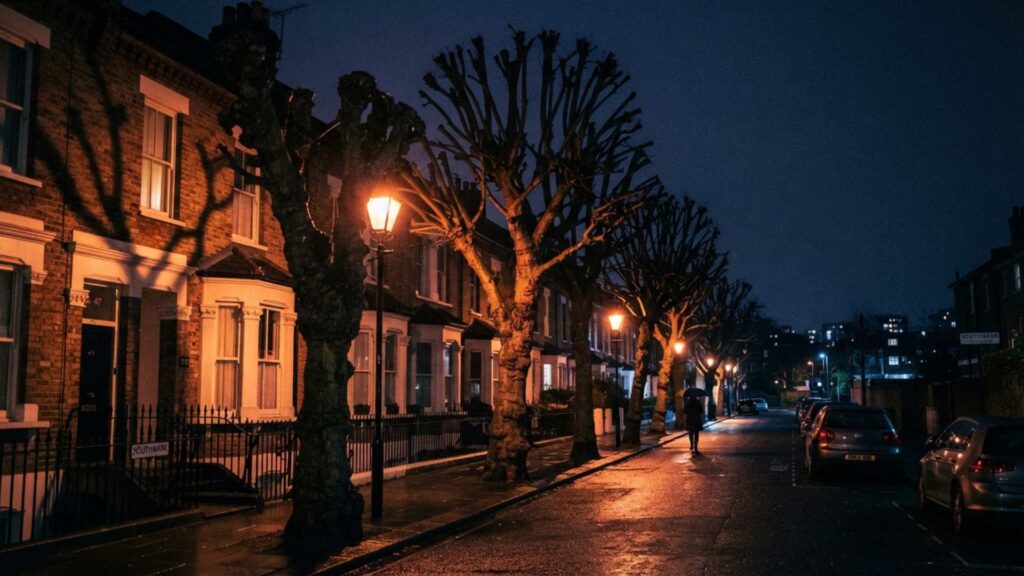
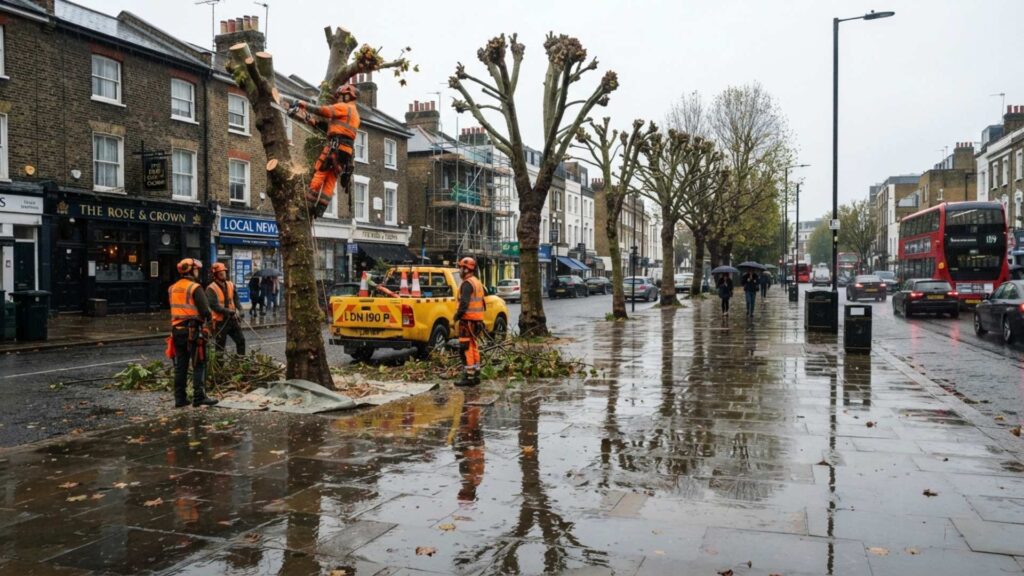
The danger of skipping pollarding cycles is something many homeowners do not understand until a branch fails. Once a tree has been pollarded, the regrowth grows from the cut surface of the pollard head rather than from a natural branch junction. This means the attachment point is inherently weaker than a normal branch.
When the tree is maintained on a regular cycle — every 2-5 years — the regrowth stays small, light, and manageable. When cycles are skipped, the regrowth becomes progressively larger and heavier. A pollarded lime left for 8-10 years can produce shoots 5-6 metres long and 15cm in diameter at the base. These are heavy enough to cause serious damage if they fail — and fail they do, because the attachment to the pollard head cannot support them.
If your tree has been left too long between pollarding cycles, we can bring it back under control. But the longer it is left, the more complex, expensive, and risky the work becomes. Getting back onto a regular schedule is always the best course of action.
Pollarding Costs in South London
Pollarding costs in South London depend on the tree’s species, the volume of regrowth, access, and the number of trees. A single medium tree on a regular cycle is straightforward and affordable — typically £300 to £600. Large trees or trees with many years of overdue regrowth cost more due to the volume of material and the additional rigging required — potentially up to £1,200 or more.
Multiple trees on the same site are discounted. We can also set up a recurring pollarding cycle so you are contacted automatically when your trees are due — preventing the costly situation of leaving them too long.
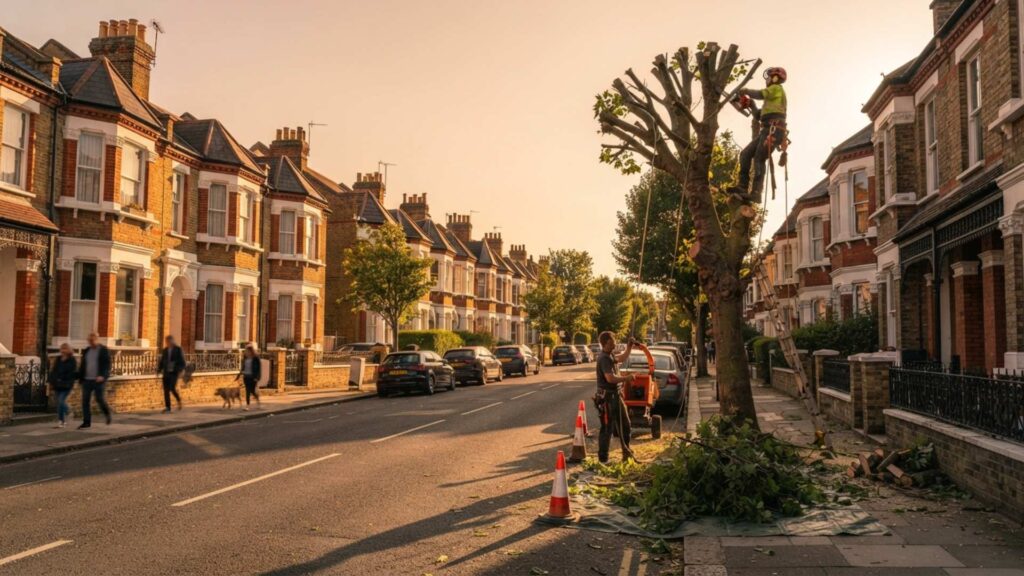
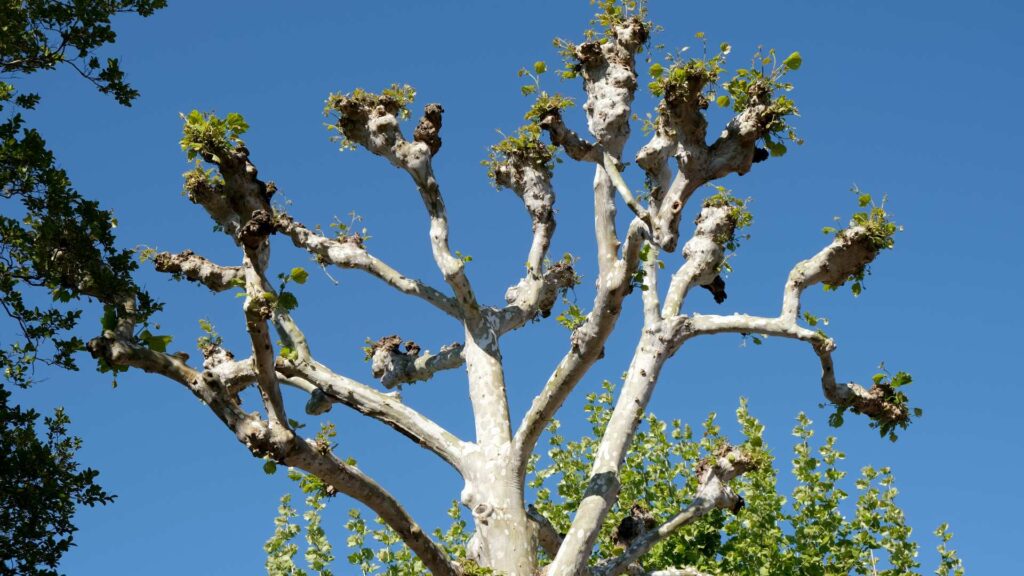
We pollarded three mature limes lining the driveway of a residential property in Herne Hill SE24. The trees had last been pollarded approximately six years earlier — too long for limes, which should ideally be on a three-year cycle. The regrowth had become substantial, with shoots up to 4 metres long and around 10cm in diameter at the base. Several shoots showed signs of cracking at the attachment point.
We cut all three trees back to their established pollard framework over a single day. All three trees were in good condition beneath the overgrown regrowth and will produce healthy new shoots. We set the client up on a three-year cycle to prevent the regrowth getting out of hand again.
A single medium tree on a regular cycle typically costs between £300 and £600. Large trees or overdue pollards with heavy regrowth cost more. We provide free site visits and fixed written quotes.
It depends on the species and growth rate. Willows may need pollarding every 1-2 years. Limes and London planes are typically pollarded every 3-5 years. We recommend a specific cycle for each tree.
No. Pollarding is only suitable for species that tolerate hard pruning and regenerate vigorously — London planes, limes, willows, horse chestnuts, and some oaks. Most conifers, birch, beech, and cherries should not be pollarded.
The regrowth becomes large, heavy, and weakly attached. It is significantly more likely to fail than normal branches. We can bring overdue pollards back under control, but the longer they are left, the more complex and expensive the work becomes.
If the tree has a TPO or is in a conservation area, consent from the council is required — even if the tree has been pollarded before. We check the status and handle the application.
Call us or fill in the contact form for a free site visit and quote. We serve Lewisham, Greenwich, Southwark, Bromley, Lambeth, Dulwich, Catford, Deptford, Brockley, Camberwell, Peckham, Blackheath, Herne Hill, Eltham, Forest Hill, and all surrounding areas.