
Hedge trimming in South London starts from around £150 for a standard residential garden hedge, with costs varying based on the hedge’s length, height, species, and access — a 2-metre privet along a front boundary is a very different job to a 4-metre laurel running 30 metres along a rear garden in Bromley. Tree Surgeons in South London provides professional hedge cutting for homeowners, property managers, housing associations, schools, and commercial clients across Lewisham, Greenwich, Southwark, Bromley, and Lambeth. Unlike general gardening companies, we have the equipment, insurance, and climbing capability to handle tall and overgrown hedges that are beyond the reach of domestic tools.
hedge trimming services cover every type of hedge work across South London — from Our routine seasonal maintenance to major renovation cutting on neglected hedges.
We trim and shape garden hedges of all sizes. Whether you need a tidy front hedge, a boundary hedge cut back to the fence line, or a large rear hedge reduced in height and width, we carry out the work efficiently with full clean-up included. We handle hedges that need a routine seasonal trim and hedges that have been left for years and need hard cutting to bring them back under control.
We provide regular hedge maintenance for commercial properties, housing associations, schools, care homes, churches, and residential estates across South London. We set up a scheduled programme — typically two to three cuts per year — so hedges stay tidy year-round without you arranging each visit separately.
Some hedges grow beyond the reach of domestic tools. Leylandii can put on 60-90cm per year if unchecked. Laurel hedges left for a few seasons can reach 4-5 metres tall and 2-3 metres wide. We have professional equipment, scaffold towers, and access platforms to handle tall hedges safely.
One important species-specific point: leylandii and most conifers (except yew) do not regenerate from old brown wood. If a leylandii hedge has been left to grow too wide, it cannot be cut back beyond the green foliage — only the green growth produces new shoots. We always advise on what is realistic for your specific hedge species before starting work.
Broadleaf species — laurel, privet, beech, hornbeam, hawthorn — tolerate hard renovation cutting and regrow well. A severely overgrown laurel hedge can be cut back to a framework of main stems and will produce dense new growth within a season.
Hedges on or near property boundaries are a common source of disagreement between neighbours. If a neighbour’s hedge is encroaching onto your property, you generally have the legal right to cut it back to the boundary line — provided you offer the cuttings back to your neighbour.
For hedges over 2 metres tall that are causing problems, the affected party may have rights under Part 8 of the Anti-Social Behaviour Act 2003 (High Hedges). We can advise on common scenarios, though we recommend speaking with your local council for formal complaints and speaking with your neighbour first where possible.
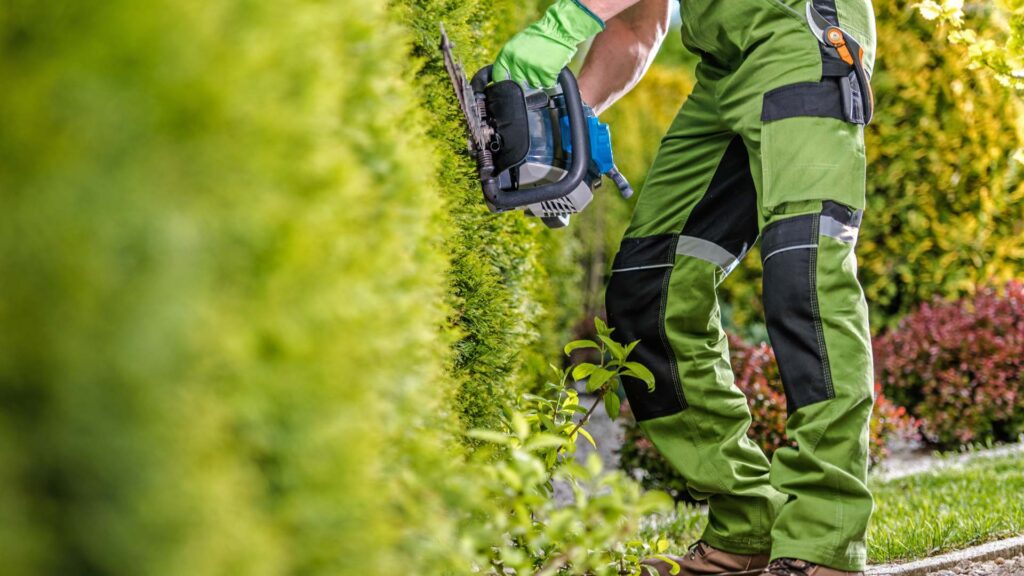
When to trim your hedges depends on the species and how formal you want the finish to look.
Most hedges in South London benefit from two cuts per year. The first in late May or early June after the main spring growth flush, and the second in late August or September to tidy up before winter. Fast-growing species like privet and leylandii may need a third cut in midsummer. Slower-growing species like yew and beech often need only one cut per year — typically in late summer.
Bird nesting season. We check for signs of active nesting before any hedge work, in line with the Wildlife and Countryside Act 1981. The main nesting season runs from March to August. Light trimming of the outer surfaces is usually fine during nesting season, as birds typically nest deeper in the hedge. Heavy renovation cutting is best scheduled outside nesting season — between September and February.
Hedge maintenance benefits from one simple principle that most homeowners miss: always trim a hedge so it is slightly wider at the base than at the top. This gentle A-shape or batter ensures the lower branches receive enough light to maintain foliage. A hedge that is wider at the top shades out its own base and gradually becomes bare and leggy at the bottom — a common problem across South London gardens that is difficult to reverse once established.
For formal hedges, we cut to a clean, level line using string guides. For informal or mixed native hedges, we follow the natural shape and allow flowering species to bloom before cutting where the client prefers.
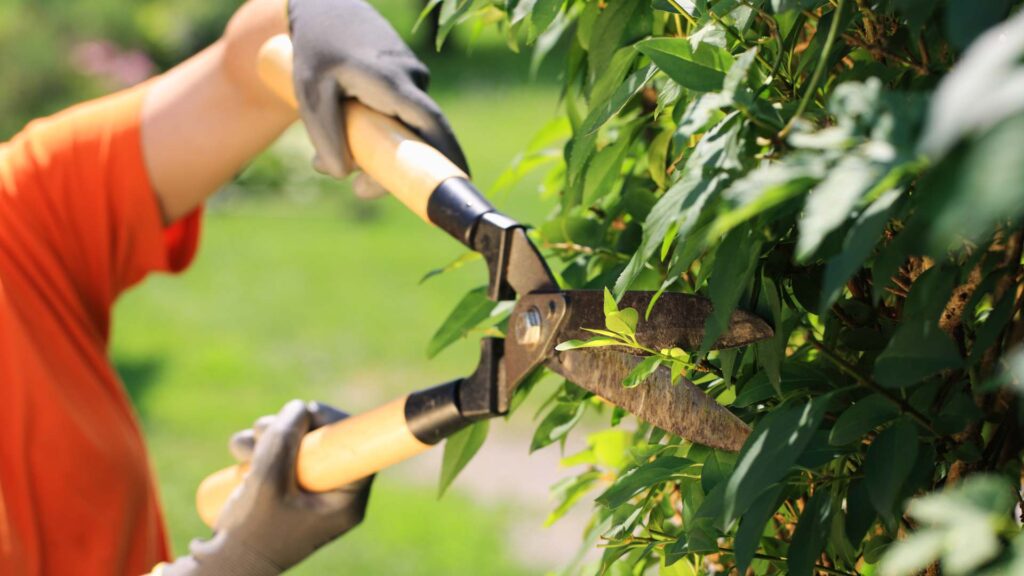
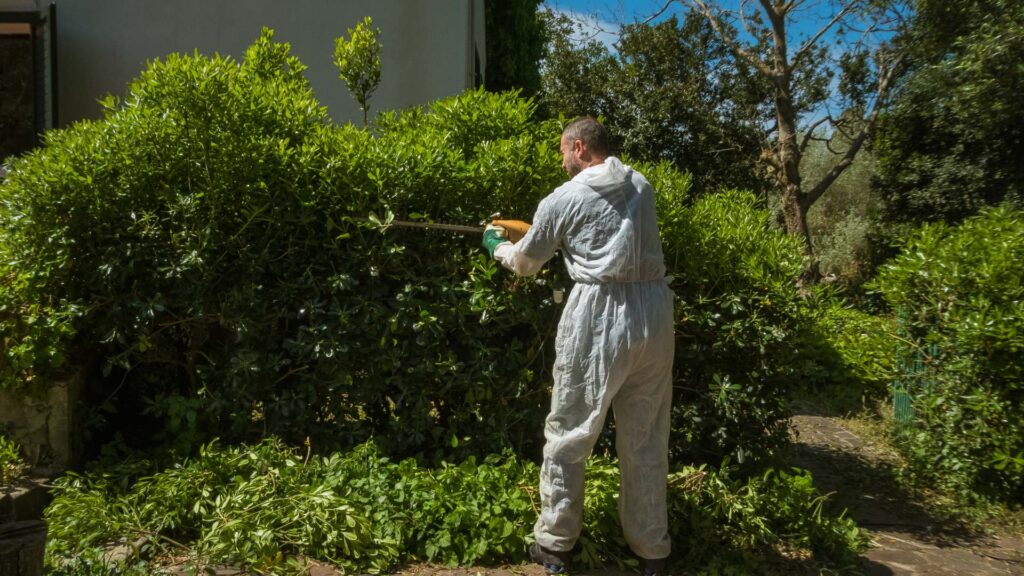
Hedge trimming costs in South London depend on the hedge’s length, height, species, and access. A short front garden hedge costs less than a 30-metre boundary hedge. Tall hedges requiring scaffold access or platform work cost more than hedges reachable from the ground.
Standard residential hedges typically start from around £150. Larger or more complex jobs are quoted on site. Regular maintenance clients receive consistent per-visit pricing.
We provide written quotes after a site visit — no hourly rates and no surprises.
Standard residential hedges start from around £150. Costs depend on the hedge’s length, height, species, and access. We provide written quotes after a site visit. Regular maintenance clients receive consistent per-visit pricing.
Most hedges benefit from two cuts per year — late spring and late summer. Fast growers like privet and leylandii may need three cuts. Slow growers like yew may only need one annual cut in late summer.
Most broadleaf species — laurel, privet, beech, hornbeam, hawthorn — tolerate hard renovation pruning and regrow well. Leylandii and most conifers (except yew) do not regenerate from old brown wood and cannot be cut back beyond the green foliage.
There is no specific maximum height. However, if a hedge over 2 metres tall is causing a nuisance to a neighbouring property, the affected neighbour can make a complaint to the local council under the High Hedges legislation. The council can require the hedge to be reduced.
Yes. All cuttings and trimmings are removed from your property, including any that fall onto paths, driveways, or neighbouring land.
Call us or fill in the contact form for a free quote. We serve Lewisham, Greenwich, Southwark, Bromley, Lambeth, Dulwich, Catford, Deptford, Brockley, Camberwell, Peckham, Blackheath, Herne Hill, Eltham, Forest Hill, and all surrounding areas.