Crown reduction in South London costs between £400 and £1,500 for most residential trees, depending on the species, size, access, and the extent of reduction required — with large sycamores and mature oaks at the upper end and smaller ornamental trees at the lower end. Tree Surgeons in South London carries out crown reductions to BS3998 standards across Lewisham, Greenwich, Southwark, Bromley, and Lambeth, using NPTC-qualified climbers who cut to natural growth points rather than topping to stubs. Crown reduction is the most requested tree surgery service we carry out — and the one where the difference between a qualified arborist and an unqualified operator is most visible in the result.
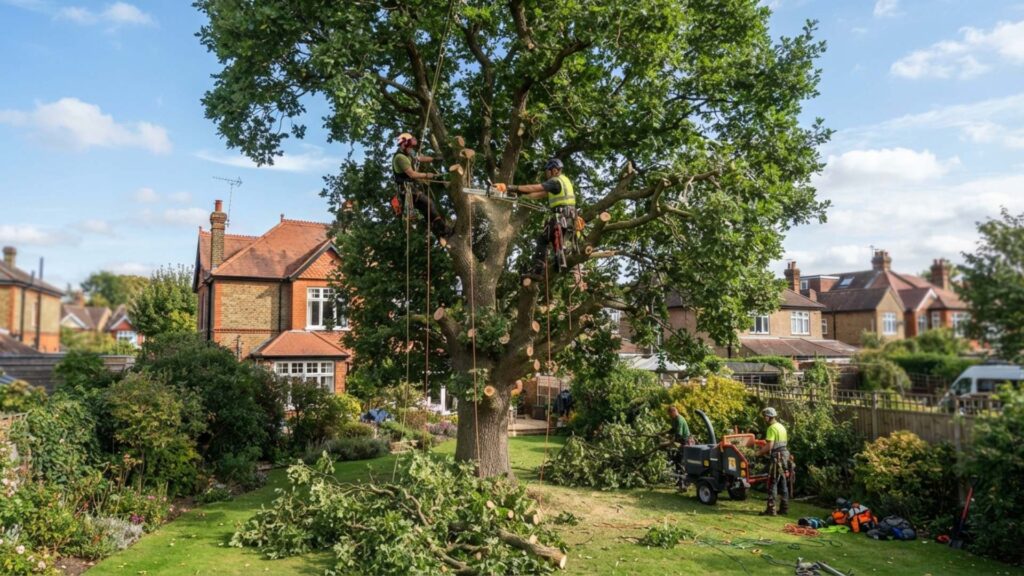
Crown reduction is an arboricultural technique that reduces the overall height and spread of a tree’s canopy by shortening branches back to suitable secondary growth points. The tree becomes smaller — less height, less spread — while keeping its natural shape and outline intact.
Each cut is made to a lateral branch at least one-third the diameter of the branch being removed. This ensures the remaining branch is large enough to sustain the tree’s energy needs and the wound can be compartmentalised and healed. The result is a smaller, lighter, better-shaped canopy that lets in more light, reduces wind loading, and regrows gracefully over the following seasons.
This is fundamentally different from topping — and understanding that difference is critical before you hire anyone to work on your trees.
Crown reduction versus topping is not a matter of degree — they are completely different practices with completely different outcomes.
South London is full of trees that have been topped by unqualified operators. The dense clusters of vertical shoots growing from old stub cuts are a visible signature of bad work — and they create long-term maintenance headaches that end up costing the homeowner far more than a proper reduction would have in the first place.
We do not carry out topping under any circumstances. If another company has quoted you for topping your tree, we strongly recommend getting a second opinion from a qualified arborist.
How we carry out crown reductions follows a precise, four-stage process.
First, we visit the site for a free assessment. We inspect the tree’s species, size, condition, and surroundings. We discuss what you want to achieve and provide a written quote specifying the proposed reduction — for example, “reduce crown by approximately 2-3 metres in height and 1.5-2 metres in lateral spread.” A vague quote like “reduce the tree” gives you no idea what you are getting
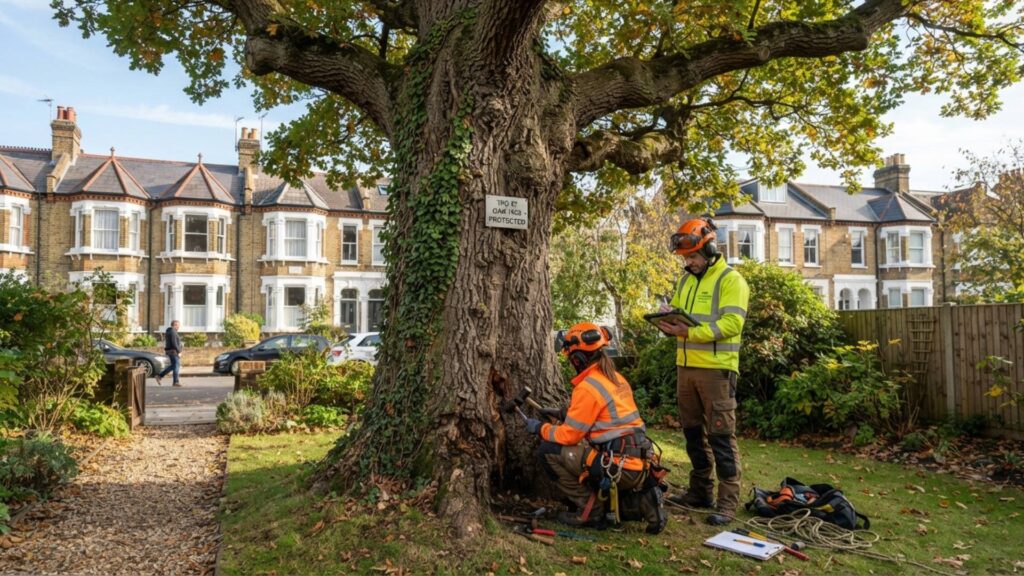
Second, we check for legal restrictions. If the tree has a TPO or sits within a conservation area, we handle the consent application before scheduling the work. Many areas across Dulwich, Blackheath, Lewisham, Greenwich, and Bromley carry these designations.
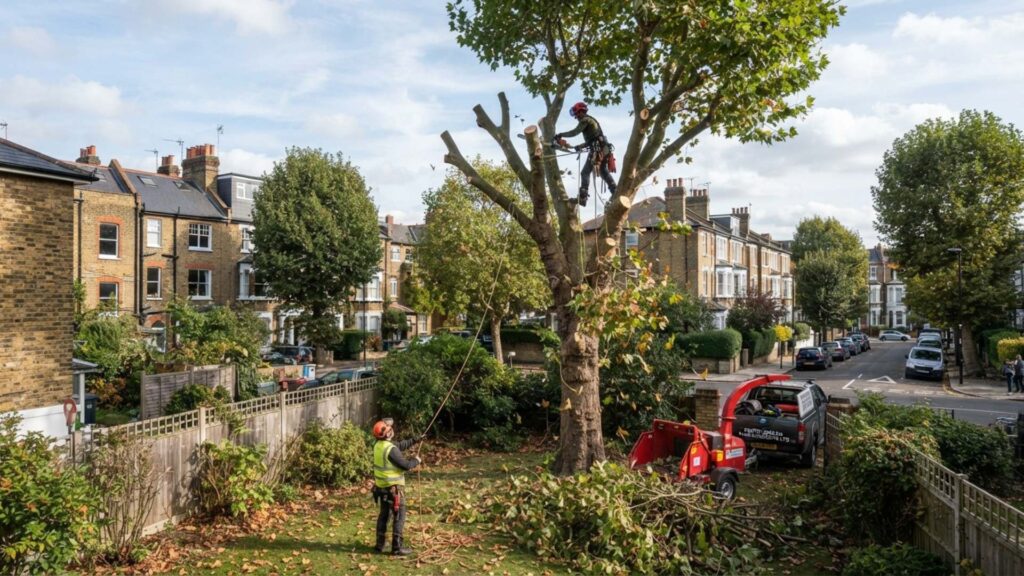
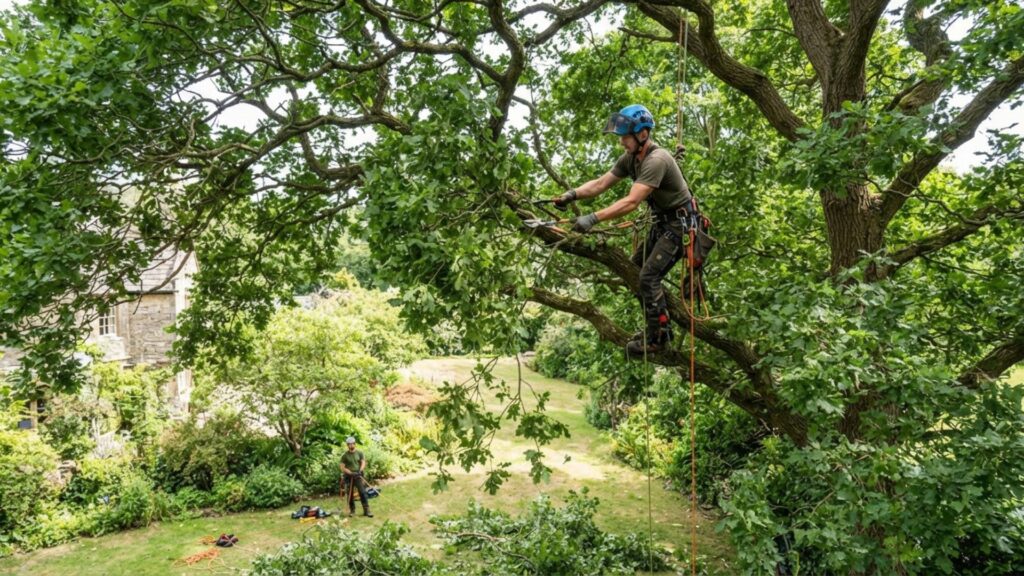
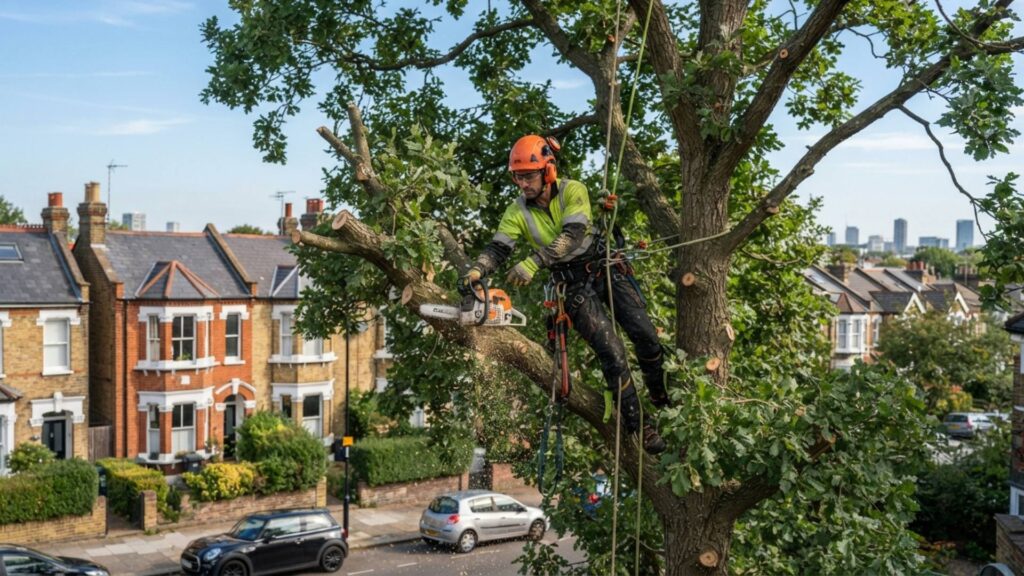
Third, our climbing team carries out the reduction. They work through the canopy systematically, shortening branches back to suitable growth points. Every cut maintains the tree’s natural silhouette — we reduce evenly around the entire crown to keep it balanced and symmetrical, not just hack back the side closest to the house.
Finally, we leave the site clean. All cuttings and debris are removed. Paths swept, lawns raked, neighbouring areas cleared.
When crown reduction is the right solution depends on the specific problem you are trying to solve. It is appropriate in several common scenarios across South London.
A tree has outgrown its space and is too close to a building, boundary wall, or neighbouring property. South London‘s Victorian and Edwardian terraces often have gardens that were designed for much smaller trees than the mature specimens now growing in them — a sycamore planted 40 years ago can easily reach 20 metres with a 15-metre canopy spread.
A large canopy is blocking light to a garden, room, or neighbouring property. This is the most common reason clients in Lewisham, Dulwich, and Greenwich request crown reductions — large deciduous trees casting deep shade across entire gardens from May through October.
A tree is catching excessive wind and there are concerns about branch failure. Reducing the canopy area reduces wind loading — the same principle as shortening a sail.
A tree’s weight distribution is uneven — perhaps from historical bad pruning, storm damage, or growing toward light — and needs rebalancing to reduce the risk of structural failure.
A local authority has granted consent for reduction work on a TPO-protected tree.
If you are unsure whether your tree needs a crown reduction or a different approach — thinning, lifting, or pollarding — we provide free site visits. Our arborists recommend the most appropriate work for your specific tree and situation.
South London’s tree population includes several species that regularly require crown reduction due to their vigorous growth habits.
Our arborists assess each species individually. The amount that can be safely removed, the best time of year for the work, and the expected regrowth pattern all vary by species.
Crown reduction costs in South London depend on the tree’s size, species, the extent of reduction needed, and access to the site. Small to medium trees in accessible gardens start from around £400. Large trees with spreading canopies — common across Lewisham, Dulwich, and Greenwich — typically range from £800 to £1,500. Very large specimens requiring extensive climbing, rigging, or aerial platform access cost more.
Trees overhanging roads that require traffic management are at the higher end due to the additional logistics involved.
We provide free site visits and fixed written quotes. You know the exact cost before any work begins — no surprises on the day.
Small to medium trees start from around £400. Large trees typically range from £800 to £1,500. We provide free site visits and fixed written quotes so you know the exact cost before any work begins.
We recommend removing no more than 25-30% of the canopy in a single operation. Removing more stresses the tree and triggers excessive, weakly attached regrowth. If a larger reduction is needed, we recommend doing it in two stages over consecutive years.
Yes. A properly reduced tree produces healthy new growth from the cut points. This regrowth is better attached than the regrowth caused by topping. Most trees need a follow-up reduction every 3-5 years depending on species and growth rate.
Not when done properly. A crown reduction carried out to BS3998 standards — cutting to appropriate growth points, removing no more than 25-30% — is an established arboricultural practice. What damages trees is topping, over-reduction, and flush cuts — not proper reduction by qualified arborists.
If the tree is protected by a TPO or is in a conservation area, written consent from the council is required before any work. We check the status of every tree and handle the application where needed.
Call us or fill in the contact form for a free no-obligation site visit and quote. We serve Lewisham, Greenwich, Southwark, Bromley, Lambeth, Dulwich, Catford, Deptford, Brockley, Camberwell, Peckham, Blackheath, Herne Hill, Eltham, Forest Hill, Sydenham, Crystal Palace, and all surrounding areas.