Professional tree pruning in South London costs between £250 and £1,500 depending on the tree’s size, species, and the type of pruning required — with crown reductions on large garden trees accounting for the majority of work our arborists carry out across Lewisham, Greenwich, and Dulwich. Tree Surgeons in South London has over 13 years of experience pruning trees to BS3998 standards in residential and commercial settings. Our NPTC-qualified, fully insured climbing teams handle everything from routine maintenance on small ornamental trees to major crown reductions on 20-metre sycamores and oaks.
Types of tree pruning we carry out in South London cover every standard arboricultural technique — each suited to a different situation and a different goal. Understanding which type your tree needs is the first step to getting the right result.
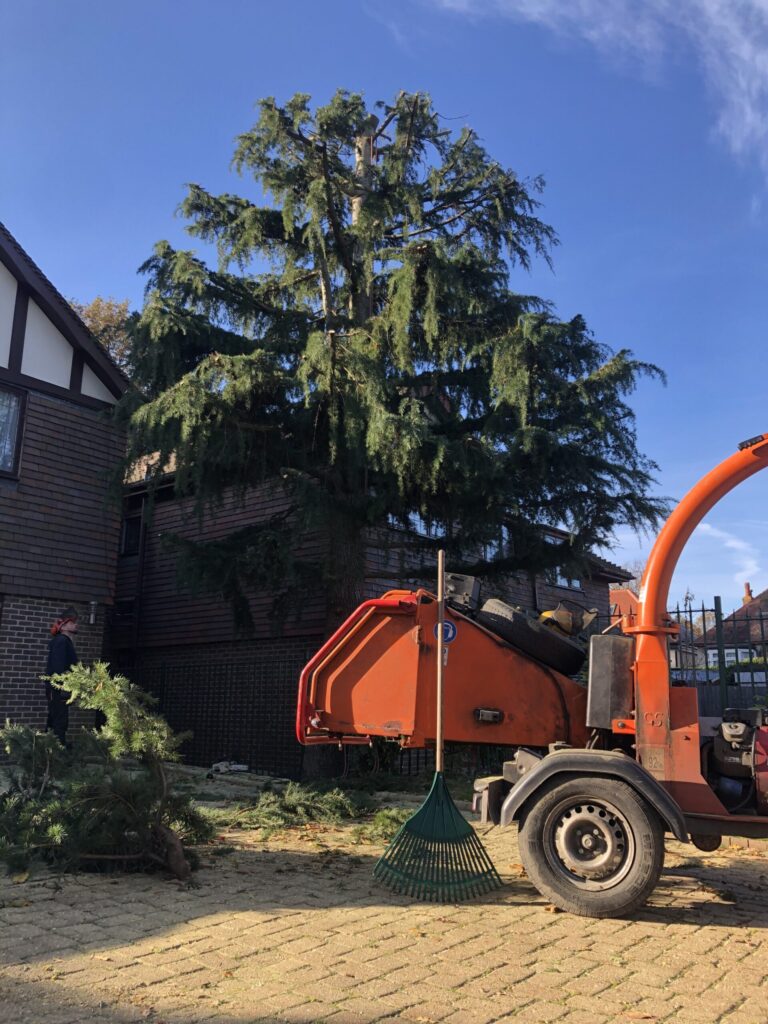
Crown reduction reduces the overall height and spread of a tree’s canopy by cutting branches back to suitable secondary growth points. The tree becomes smaller while keeping its natural shape. This is the most requested pruning service across South London — particularly for mature sycamores in Lewisham, large oaks in Dulwich gardens, and London planes across Greenwich and Blackheath that have outgrown their space or are blocking light.
A proper crown reduction cuts to a lateral branch at least one-third the diameter of the branch being removed. This is fundamentally different from topping, which cuts to stubs and causes weak, dangerous regrowth.
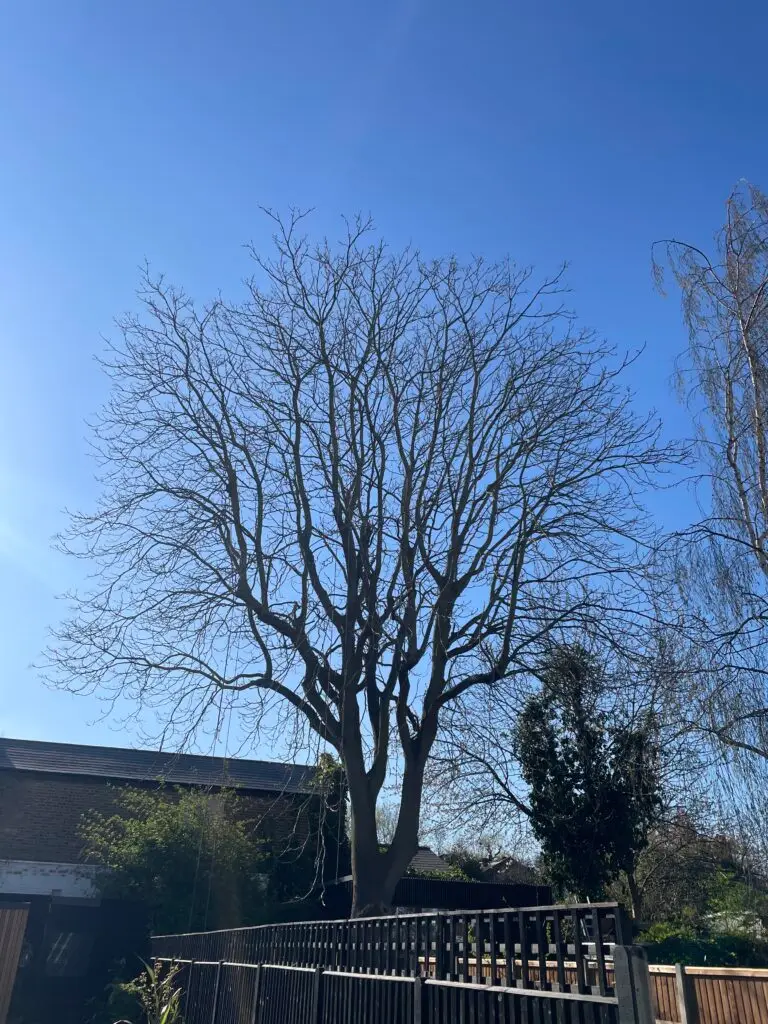
Crown thinning removes selected secondary branches throughout the canopy to let more light through and reduce wind resistance. Unlike reduction, thinning does not change the tree’s overall size or shape — the outline stays the same, but the canopy becomes lighter and more open. Thinning is ideal for large deciduous trees that block light to gardens and windows without being too large for their location.
Crown lifting removes lower branches to increase clearance beneath the tree — over paths, driveways, lawns, roads, or buildings. We frequently carry out crown lifts in Catford, Brockley, and Forest Hill where mature street trees regularly drop below the required clearance height over pavements. We are careful not to over-lift, as removing too much lower growth compromises the tree’s wind stability.
Deadwood removal targets dead and dying branches that pose a safety hazard — especially over paths, gardens, driveways, and buildings. This does not change the tree’s size or shape. It specifically removes wood that has lost structural integrity and could fall without warning.
Pollarding is a traditional technique for managing fast-growing species like willows, limes, and London planes. It cuts branches back to a permanent framework and requires a regular maintenance cycle — typically every 2–5 years. Once started, pollarding must be maintained; skipping cycles creates heavy, weakly attached regrowth that is more dangerous than the original canopy.
Proper tree pruning matters because bad pruning causes more damage than leaving a tree alone — and South London is full of trees that have been topped, over-thinned, or hacked back by unqualified operators.
Topping cuts the main stem and major branches to stubs. The tree responds with a burst of thin, fast-growing shoots from the cut points. These shoots grow vertically, are weakly attached, catch more wind, and are far more likely to fail than the original branches. A topped tree is more dangerous and more expensive to maintain long-term.
Flush cuts remove the branch collar — the ring of tissue the tree uses to heal over the wound. Without it, the wound stays permanently open, inviting decay and disease into the trunk.
Lion-tailing strips all interior branches and leaves growth only at the tips. This creates long, heavy limbs with no wind dampening. They whip in storms and snap under their own weight.
Our arborists prune to natural growth points, making clean cuts that the tree can compartmentalise and heal. Every cut has a purpose — to improve structure, health, safety, or your use of the space around the tree.
Tree Preservation Orders and conservation areas affect a significant number of pruning jobs across South London. Lewisham, Greenwich, Dulwich, Blackheath, Bromley, and Herne Hill all have high concentrations of protected trees.
If your tree has a TPO or sits within a conservation area, you need written consent from the local council before any pruning work can begin. We check the status of every tree as part of our initial assessment and handle the application process on your behalf. We know what each South London borough’s tree officers typically approve, which reduces the risk of rejected applications and speeds up the consent process.
What to expect when we prune your trees follows a straightforward four-step process.
First, we visit the site for a free assessment. We inspect the tree, discuss your goals, check for TPOs, and recommend the most appropriate pruning approach.
Second, we provide a written quote with a clear specification. For example: “Reduce crown by approximately 2.5 metres in height and 2 metres laterally” or “Thin crown by 20%, removing crossing and rubbing branches throughout.” No vague “tidy up the tree” quotes.
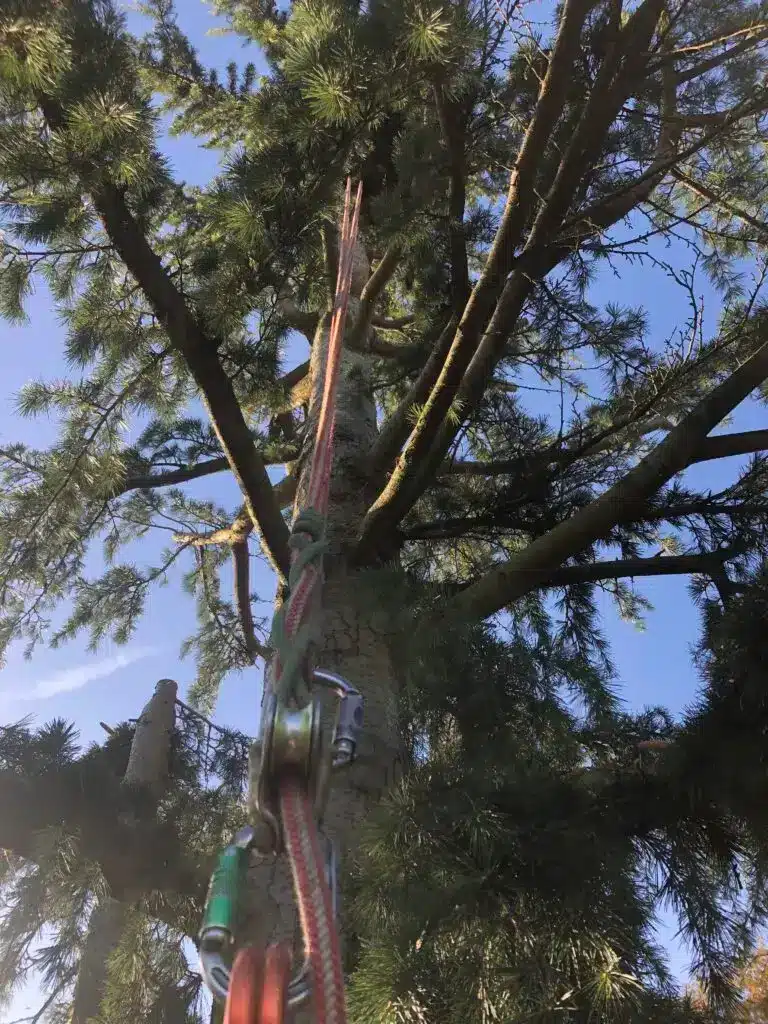
Third, our climbing team carries out the pruning. If we discover anything unexpected in the canopy — hidden decay, active bird nesting, structural defects not visible from the ground — we stop and discuss it with you before proceeding beyond the agreed scope.
Finally, we leave the site clean. All cuttings and debris are removed. Paths swept, lawns raked, neighbouring areas cleared. Our customers regularly highlight this in their reviews.
Tree pruning costs in South London depend on the tree’s size, species, the type of pruning needed, and access. Light pruning on a small to medium garden tree starts from around £250. Crown reductions on large mature trees typically range from £500 to £1,500. Complex jobs involving large trees near buildings, restricted access, or protected species cost more.
We provide free site visits and fixed written quotes with no obligation. You know the exact cost before any work begins.
Light pruning on small to medium trees starts from around £250. Crown reductions on larger trees range from £500 to £1,500. We provide free site visits and fixed written quotes for every job.
Most deciduous trees are best pruned during the dormant season between November and March. Some species have specific timing requirements — cherries and plums should be pruned in summer to reduce the risk of silver leaf disease. Our arborists advise on the correct timing for your tree.
We recommend removing no more than 25–30% of the canopy in a single operation. Removing more than that stresses the tree and triggers excessive regrowth. If a larger reduction is needed, we may recommend doing it in two stages over consecutive years.
If the tree is protected by a TPO or is within a conservation area, yes — written consent from the council is required. Otherwise, you can generally prune trees on your own property. We check the status of every tree before quoting.
Tree surgery covers all professional tree work — pruning, felling, stump grinding, surveys, and planting. Pruning is one specific type of tree surgery focused on selectively removing branches to improve health, safety, shape, or light.
Call us or fill in the contact form for a free no-obligation quote. We serve Lewisham, Greenwich, Southwark, Bromley, Lambeth, Dulwich, Catford, Deptford, Brockley, Camberwell, Peckham, Blackheath, Herne Hill, Eltham, Forest Hill, and all surrounding areas.